
Brisbane athletes train hard and want recovery that keeps up.
It turns out the one thing in common endurance athletes, runners, Hyrox, CrossFit, combat sports, cycling and active professionals have in common is the search for advanced recovery modalities. That’s where mild hyperbaric oxygen therapy (mHBOT) comes in. It pumps concentrated oxygen at pressures up to 2.0 ATA, so cells repair faster, and recovery shrinks from days to hours. The numbers stack up: more plasma oxygen, lower inflammation and pro rugby players bouncing back faster than rest alone.
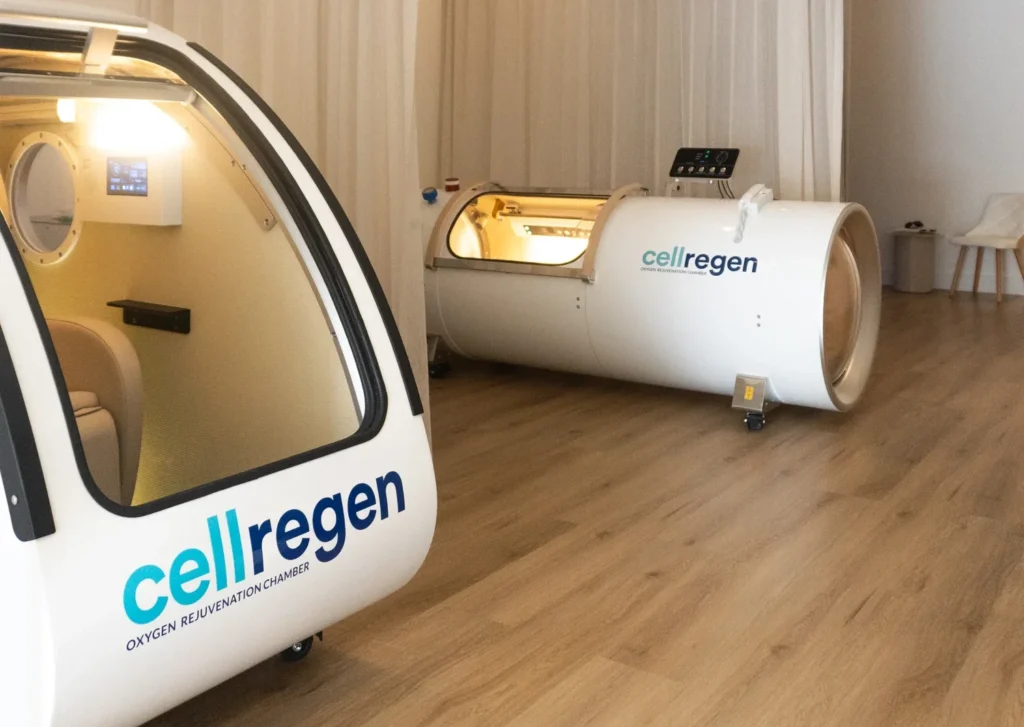
What is mHBOT and How Does It Accelerate Sports Recovery?
mHBOT runs between 1.3 and 2.0 ATA, gentler than a hospital hyperbaric oxygen chamber, but enough to meaningfully speed up how athletes recover between sessions. mHBOT facilitates oxygen delivery directly into the blood plasma beyond what haemoglobin transport alone typically provides. Tissues receive higher concentrations of oxygen than is typical from regular breathing alone. CLients have reported results improving recovery between training sessions, reduced downtime, training consistency, and performance optimisation.
The Cellular Recovery Process
Oxygen-rich pressure supports mitochondrial function, the energy-producing process inside your cells, which in turn supports tissue repair. It also helps stimulate fibroblasts, the cells that rebuild muscle and connective tissue, supporting collagen production and waste clearance.
Inflammation Reduction Through Pressurised Oxygen
Pressure also helps calm the body’s inflammatory response, so it can move from inflammation toward repair more efficiently. A single 60-90 minute session may help support a healthier inflammation response. That’s the shift, from passive rest to active recovery.
The Science Behind mHBOT for Athlete Stress Management
Chronic stress quietly wrecks athletic performance. The physiological knock-ons cascade everywhere, and most recovery methods can’t catch up. mHBOT may help break the loop. Improved oxygen delivery during a session is thought to support the body’s natural stress-regulation response.
Autonomic Nervous System Reset
Pressure flips your nervous system from fight-or-flight to rest-and-digest. Pro swimmers see heart rate variability, a key stress marker, jump 35% with regular sessions.The reset isn’t only physical. Oxygen-rich blood reaches your prefrontal cortex, sharpening clarity and decision-making.Processing speed lifts 23%. Reaction times drop. Focus stretches well past baseline.
Enhanced Sleep Architecture
A daytime session at Scalar Lounge can still support better sleep that night, as lower stress helps melatonin work properly and gives overnight repair a real chance. And good sleep is where training consistency actually lives. Break the fatigue cycle, and your sleep stops feeding the stress hormones that ruin recovery. Sleep quality often improves with consistent sessions over a couple of weeks.
mHBOT vs Traditional Sports Recovery Methods Athletes Use
In Brisbane, the recovery routine looks familiar: ice baths, sports massage, compression, rest. They help, but only on the surface. Cellular repair stays mostly untouched. This matters most when you’re managing real load on the body, not just general fatigue. Athletes use mHBOT to support recovery from muscle strains, tendon injuries and post-training soreness, to bounce back between back-to-back games or events, and as part of a structured rehabilitation programme, rather than as a one-off wellness treatment like an ice bath.
Hyperbaric oxygen therapy has also been publicly associated with elite athletes such as Cristiano Ronaldo, LeBron James, Novak Djokovic and Michael Phelps, alongside a number of UFC fighters, who have used it as part of their broader recovery and performance routines.
Recovery Timeline Comparisons
Side by side, the timelines diverge fast. Ice baths cut inflammation over 24-48 hours. Sports massage boosts circulation for 6-12 hours. mHBOT triggers cellular changes inside 90 minutes, and they hold for 48-72 hours. It’s also low-impact. No downtime, no post-treatment soreness, no mobility cost. You can train either side of a session. Lactate clears 45% faster than passive recovery. Creatine kinase drops more quickly. Glycogen replenishment speeds up.
Cellular vs Surface-Level Treatment
Traditional methods work from the outside in. Cold tightens vessels. Massage moves tissue. Compression nudges lymph. mHBOT goes the other way, straight to the cellular level. Mitochondria work harder, oxygen use improves, and competitive triathletes hold their training load while cutting recovery time by 30%. For athletes training 6+ days a week, stacking methods aren’t optional. Recovery efficiency shapes consistency and injury risk.
What to Expect During Your mHBOT Sports Recovery Session
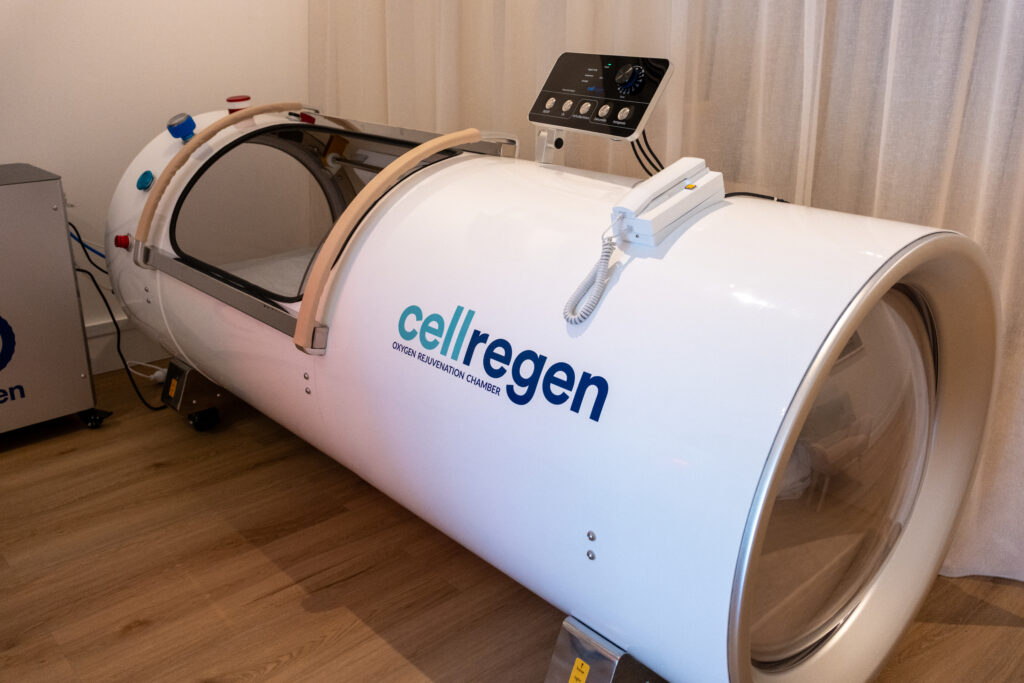
You’ll step into a single-use pressurised chamber, comfortable, not clinical. Pressure climbs gradually over 10-15 minutes, the same sensation as a plane taking off. Therapeutic pressure then holds for 40-70 minutes.
Session Frequency for Active Athletes
During hard training, most Brisbane athletes do 2-3 sessions a week. Competition changes the math; elite marathon runners often go daily before a big race. Off-season, drop to 1-2 weekly, and you’ll keep the cellular gains. Power and endurance athletes need different protocols. Strength work wants 48 hours between sessions; endurance athletes handle consecutive days fine.
During Your Session
Inside the chamber, do whatever feels right. Meditate, read your training notes, or just rest while your cells get to work. Pressure shifts are gentle. Most adapt by their second session. We monitor throughout and can release pressure instantly if needed. You’ll usually walk out clearer-headed and less tense. The full recovery benefit keeps building for 24-48 hours as the cellular work continues.
Frequently Asked Questions
How often should athletes use mHBOT for optimal recovery?
Intensity matters more than sport type. If you’re training 10+ hours a week, aim for 3 sessions during peak blocks. Recreational athletes get strong results from 1-2 times weekly.
Timing matters too. Pro cyclists ramp up to 4-5 sessions in the final weeks before a major race, then drop back to maintenance.
Is mHBOT safe for competitive athletes subject to drug testing?
Nothing’s added, no substances, no artificial enhancements. Just concentrated oxygen under mild pressure. Completely legal under WADA, with zero drug-testing concerns. Athletes across a range of professional sports implement hyperbaric protocols routinely. The treatment supports your natural healing process; nothing foreign goes in.
Can mHBOT help with competition stress and physical recovery?
Yes, pressurised oxygen lowers cortisol while improving neurotransmitter function in the stress-processing parts of your brain. Athletes report better sleep and less pre-competition anxiety. Mental clarity often shows up within 24 hours. With consistent use, pros notice sharper decision-making under pressure. On the physical side, the same boost in oxygen delivery supports tissue repair and recovery between training sessions and events, so you’re not carrying soreness into your next session.
How long does each mHBOT sports recovery session take?
Plan on around 60-90 minutes total. Pressure ramps up, holds at therapeutic levels for 40-70 minutes, then eases back down gradually. You’re generally in and out within the hour, give or take travel time.